


Ink is a chauvinist force of nature that maps the rise of Rupert Murdoch and editor Larry Lamb as they mould The Sun into journalistic napalm. Direct by Oscar-winner Danny Boyle, Ink captures the propulsive nature of Fleet Street at a time when tabloid journalism needed an adrenaline shot. Page 3 girls, celebrity gossip, and eye-catching headliners with questionable content, clashed with hard-hitting humanitarian think pieces.
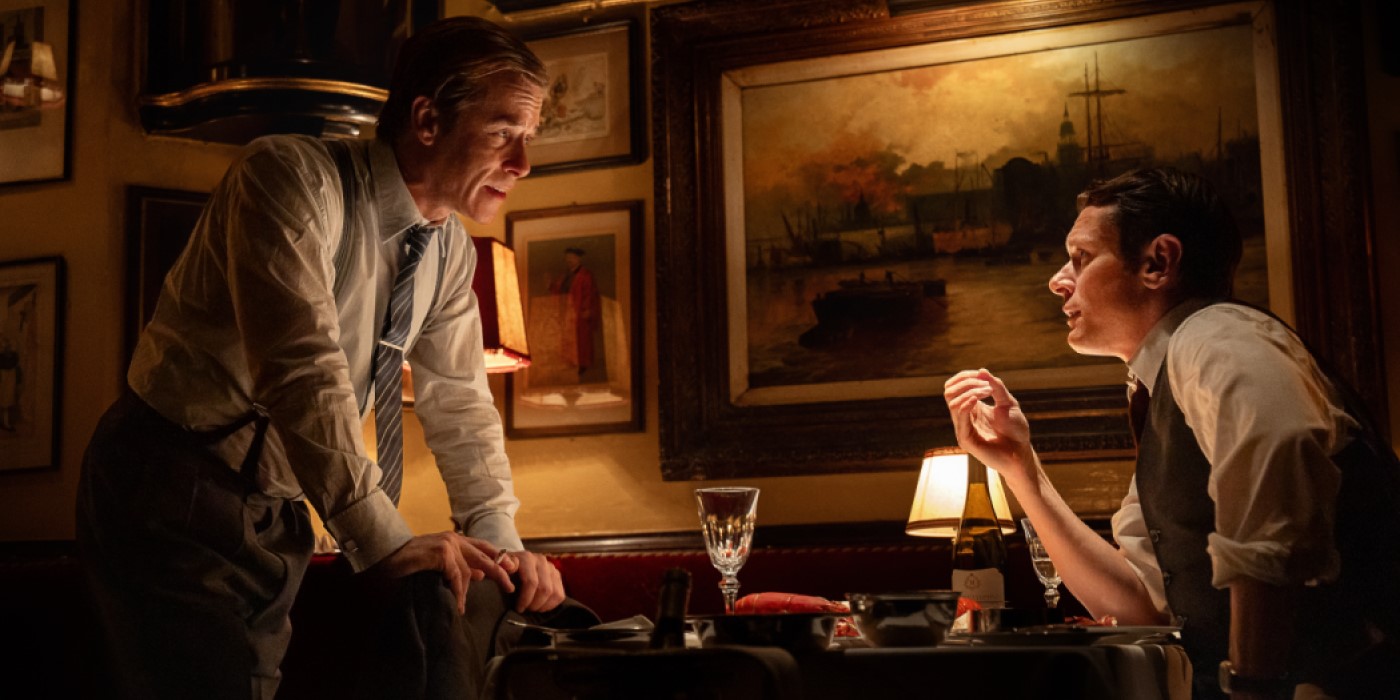
This is the maverick attitude that comes through in the adaptation from James Graham of his original stage play. Jack O’Connell continues his gradual dominance of British cinemas following 28 Years Later: Bone Temple to bring the cantankerous Larry Lamb to life. In the opposite corner stands Guy Pearce as media mogul Rupert Murdoch, determined to overcome obstacles, break down barriers, and bring something newsworthy to the British public.
This quasi-biopic of two competing media forces set on a singular mission never loses momentum, embracing chauvinism and misogynistic traits for comedy effect, but remains refreshingly self-aware. Behind the camera, Danny Boyle displays the same kind of flair that made Trainspotting so unique back when Britpop was prevalent.
Newspaper offices with a whiff of intrigue have rarely felt so kinetic, despite the presence of blatant gender bias and copious alcohol consumption. From the flagrant disregard for journalistic boundaries and a playground bully mentality for innovation, Ink might not feel original, but The Sun has never seemed so interesting.

Image Courtesy of Netflix
There are those who will say Ink is nothing new, and that Danny Boyle has made something without the dramatic chops to give his subject matter some gravitas. There is an argument to be made on that front, but in all honesty, between Jack O’Connell, Guy Pearce, and Claire Foy, this film possesses enough kudos. That The Sun became an institution among tabloid publications is nothing new, but this gives audiences a chance to appreciate the innovation without preconceptions.
A camaraderie in a time before social media and smart phones when celebrity culture was more than a screen swipe away. When smoking and drinking were a sign of masculinity rather than some kind of cautionary tale. When news was not instantly available, AI-influenced, and had a good chance of being vaguely accurate.
Among this rabble of raging testosterone Claire Foy holds her own, creating a strong female presence surrounded by cigarette smoke and male entitlement. Going toe to toe with Jack O’Connell and Guy Pearce as Jules Davies, a fictional additional, but no less crucial than Murdoch or Lamb. Establishing an intriguing triangle of competing relationships that provides Ink with colour.
Ultimately, Ink might fall on the safe side of cinematic exploration when it comes to newspaper journalist, avoiding anything libellous in the process, but there is no denying that Danny Boyle has delivered something more akin to entertainment than expose.
Ink is out on January 9, 2027.